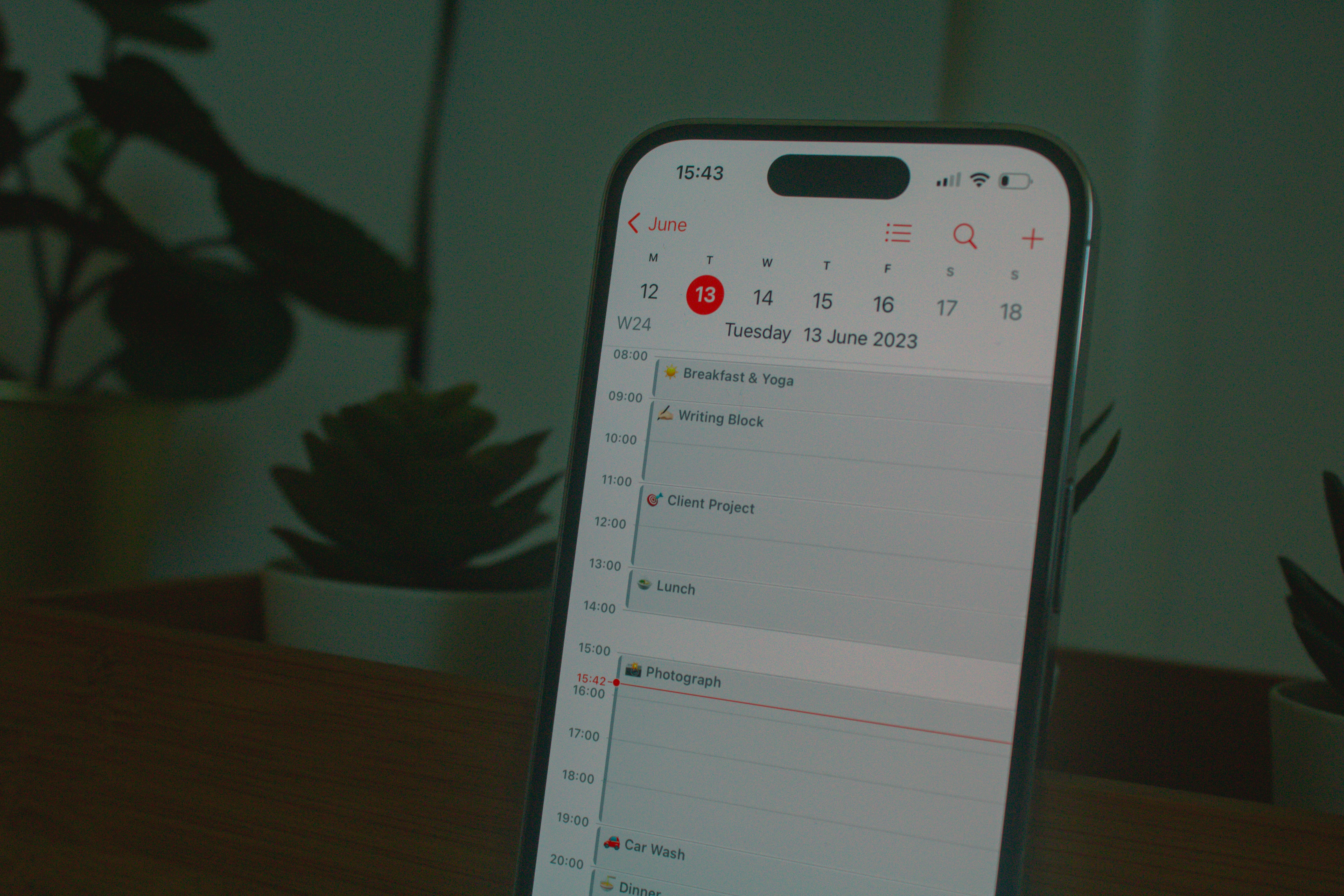
Recurring Appointments: How to Turn One-Time Jobs into Predictable Revenue
Here's something every service business owner knows: getting a new customer is expensive. Between ads, referrals, and the time spent quoting and following up, every new lead costs real money. Yet most service professionals treat every job as a one-off. Customer calls, you show up, you do the work, you send the invoice, you move on.
Then next month, you're back to hustling for leads.
Recurring appointments flip this model. Instead of waiting for the phone to ring, you build a calendar full of guaranteed work — customers who've already said yes to weekly, bi-weekly, or monthly service. Your revenue becomes predictable. Your schedule fills itself. And your customers get better service because you're proactively maintaining instead of reactively fixing.
This isn't a new concept. Gyms, dentists, and salons have used recurring scheduling forever. But in field service — plumbing, HVAC, cleaning, landscaping, pest control — most businesses still run on one-time jobs and hope for repeat calls.
That's changing. And the businesses that adapt first will win.
Why Recurring Appointments Matter for Service Businesses
1. Predictable Revenue (The Obvious One)
A solo cleaner with 15 recurring weekly clients at $150/visit has $9,000/month locked in before the month even starts. An HVAC tech with 40 quarterly maintenance contracts at $200 each has $8,000 guaranteed every quarter.
Compare that to starting each month at zero and scrambling for one-time jobs. Recurring appointments give you a revenue floor — a baseline income you can count on regardless of lead flow, seasonality, or ad spend.
2. Lower Customer Acquisition Cost
You already paid to acquire that customer — through ads, word of mouth, or a referral. Every recurring visit is essentially free revenue. No marketing cost, no sales effort, no competing with three other bids. The customer is yours.
Over a year, a $150 one-time cleaning job becomes $7,800 in annual revenue when the customer books weekly. Same customer, same acquisition cost, 52x the lifetime value.
3. Higher Customer Satisfaction
Recurring customers get better outcomes. A lawn that's mowed weekly stays healthier than one that's cut when the homeowner remembers. An HVAC system serviced quarterly breaks down less than one that's ignored until it fails in July. A home that's cleaned bi-weekly stays clean — instead of becoming a deep-clean emergency every few months.
Your customers notice this. They refer friends. They leave better reviews. And they almost never leave for a competitor, because switching means losing the convenience they've built.
4. Optimized Routes and Schedules
When you know Tuesday is always Mrs. Johnson on Oak Street at 9am and Mr. Patel on Elm Street at 11am, you can plan efficient routes. You waste less time driving, less fuel, less mental energy figuring out where to go. Your day runs like clockwork.
For teams with multiple technicians, recurring appointments make dispatching significantly easier. You know which areas are covered on which days, and you can fill gaps with one-time jobs.
5. Reduced No-Shows and Cancellations
One-time customers cancel at higher rates. They booked on impulse, they forgot, something came up, they found a cheaper option. Recurring customers are committed. They've made the appointment part of their routine. No-show rates for recurring appointments tend to be significantly lower than for one-time bookings.
Ready to stop chasing one-time jobs? Fieldbookly's recurring appointment scheduling is included on all paid plans — starting at $19/month. Start your free account →
Which Service Businesses Benefit Most?
Recurring appointments aren't for every business type. Emergency plumbing repairs, one-off electrical installations, and single-project renovations don't lend themselves to recurring schedules.
But if your business involves any of the following, you're leaving money on the table without recurring appointments:
Cleaning Services
The poster child for recurring scheduling. Weekly, bi-weekly, and monthly house cleanings account for the majority of revenue at most cleaning companies. If your customers have to manually re-book each time, you're adding friction that leads to churn.
Lawn Care & Landscaping
Grass grows every week. Hedges need trimming monthly. Seasonal cleanups happen quarterly. Lawn care is inherently recurring — your scheduling should reflect that.
HVAC Maintenance
HVAC systems need seasonal maintenance — spring tune-ups for AC, fall tune-ups for heating. The best HVAC businesses sell maintenance agreements (quarterly or biannual visits) that keep systems running efficiently and catch problems early.
Pest Control
Pest prevention is ongoing, not one-and-done. Monthly or quarterly perimeter treatments are standard. Without recurring scheduling, you're relying on customers to remember to call back — and they usually don't until ants are already in the kitchen.
Pool Service
Pools need weekly chemical balancing and cleaning during swim season. Pool service is one of the most naturally recurring businesses in field service.
Carpet Cleaning
Commercial carpet cleaning (offices, restaurants, retail) often runs on monthly or quarterly cycles. Residential customers with pets or allergies also benefit from regular deep cleaning.
Pressure Washing
Commercial properties need regular exterior cleaning. Quarterly or biannual pressure washing contracts are common for storefronts, parking garages, and apartment complexes.
Whatever your trade, Fieldbookly has you covered. Choose from industry-specific templates during setup and start booking recurring jobs in minutes. See plans & pricing →
The Problem with Manual Recurring Scheduling
If you're already doing recurring work, you might think you've got this handled. But ask yourself:
How are you scheduling recurring appointments today?
If the answer involves any of these, you have a problem:
- Manually creating each appointment. You finish today's cleaning, then open your calendar and manually add next week's. For 20 recurring customers, that's 20 entries you create by hand every week.
- Spreadsheets or paper calendars. You have a list of recurring customers and their frequencies. Every week or month, you look at the list and add them to your schedule. One missed entry means a missed appointment and an unhappy customer.
- Memory. You just know that Tuesdays are the Hendersons and Thursdays are the Garcias. This works until you get sick, hire someone, or simply forget.
- Asking customers to re-book. After each visit, you tell the customer to book again through your website or by calling. Friction kills repeat business — some customers just won't bother.
Every one of these approaches breaks as you grow. And each one introduces opportunities for missed appointments, double bookings, and customer frustration.
Automated recurring scheduling means you set it up once — frequency, day, time — and the system creates future appointments for you. No manual entry, no spreadsheets, no relying on memory.
Ditch the spreadsheets. Fieldbookly automates your recurring schedule so you never miss a visit. Try it free →
How to Set Up Recurring Appointments with Fieldbookly
Fieldbookly now includes recurring appointment scheduling on all paid plans — starting with the Solo plan at just $19/month. Here's how it works from both sides: you setting up recurring jobs from your dashboard, and your customers booking recurring services themselves.
From Your Dashboard (Creating Recurring Jobs)
When you create a new job in Fieldbookly, you'll see a "Recurring Appointment" toggle. Turn it on, and you get these options:
- Frequency — Choose from weekly, bi-weekly (every 2 weeks), monthly, or quarterly. These cover the vast majority of recurring service patterns.
- Preferred Days — Select which days of the week the appointment should occur. For cleaning businesses, this is critical — you might run crews by area (Mondays: north side, Tuesdays: downtown, etc.).
- End Condition — Three options:
- No end date — runs indefinitely until you or the customer cancels
- After X visits — great for seasonal contracts (e.g., 12 weekly lawn visits for summer)
- Until a specific date — useful for fixed-term maintenance agreements
- Summary — Before saving, you'll see a plain-English summary like "Every 2 weeks on Tue and Thu, 12 visits" so you can confirm it's right.
That's it. Save the job, and Fieldbookly generates the entire visit schedule. Each visit appears on your calendar automatically. You can view upcoming visits, reschedule individual visits without affecting the series, or pause/resume the entire schedule.
From Your Booking Page (Customer Self-Booking)
If you've enabled recurring bookings in your booking settings, your customers will see a "Make this a recurring appointment" option when they book online.
They select their service, pick a date and time, then toggle on recurring. They choose their frequency — weekly, bi-weekly, or monthly — and confirm. Done.
This is huge for cleaning and lawn care businesses. Instead of asking customers to re-book after every visit, they book once and it's handled. Less friction, more retention, more revenue.
Managing Recurring Schedules
Life happens. Customers go on vacation. Seasons change. You need flexibility.
Fieldbookly gives you three controls for any recurring schedule:
- Pause — Temporarily stop generating visits. Customer going on vacation for two weeks? Pause the schedule and resume when they're back. No cancellation, no re-setup.
- Resume — Pick back up where you left off.
- Cancel Series — End the recurring schedule entirely. All future unstarted visits are removed. Past completed visits stay in your records.
Your customers can also view their recurring schedule details and cancel appointments — or cancel the entire series — through the customer management portal, without needing to call you.
See it in action. Create your free Fieldbookly account, upgrade to Solo, and set up your first recurring job in under 5 minutes. Get started →
Pricing: Where Fieldbookly Stands Out
Recurring appointment scheduling is a premium feature on most platforms. Here's what competitors charge:
| Platform | Recurring Appointments | Starting Price | Notes |
|---|---|---|---|
| Fieldbookly | ✅ Solo plan and up | $19/month | Included at no extra cost |
| Jobber | ✅ All plans | $25/month | Per-user pricing adds up for teams |
| Housecall Pro | ✅ (as "Service Plans") | ~$59/month | Pricing not publicly listed |
| ZenMaid | ✅ All plans | ~$49/month | Cleaning only |
| ServiceTitan | ✅ Enterprise | ~$3,000+/month | Designed for large companies |
| Workiz | ✅ Paid plans | $187/month | Free plan doesn't include recurring |
Fieldbookly is the most affordable option with recurring appointments included. At $19/month on the Solo plan, you get recurring scheduling, online booking, invoicing, quotes, customer management, and SMS reminders — for less than competitors charge for scheduling alone.
For teams, the Team Pro plan at $79/month (or $66/month billed annually) includes 5 users with recurring appointments. Jobber charges $83/month for their comparable plan, and that's for just one user. Housecall Pro won't even tell you the price.
Save hundreds per year. Fieldbookly includes recurring appointments, online booking, invoicing, and more — starting at $19/month (Solo plan). No contracts. Cancel anytime. Compare plans →
5 Tips for Making Recurring Appointments Work
Having the software is step one. Here's how to maximize recurring revenue.
1. Offer a Recurring Discount
Give customers a reason to commit. A 10–15% discount for booking weekly or bi-weekly service is standard across the industry. You make more per customer overall (because they book more frequently), and the customer feels like they're getting a deal. Everyone wins.
Example: Your standard house cleaning is $175. Offer weekly clients $150/visit. That's $14 less per visit, but $7,800/year instead of a single $175 job.
2. Pitch Recurring at the End of Every Job
Your best opportunity to sell a recurring service is right after you've done great work. The customer's home is spotless, their lawn looks perfect, or their HVAC is humming. That's the moment to say: "Would you like me to come back every two weeks to keep it looking this good? I can set it up right now on my phone."
With Fieldbookly's mobile-friendly dashboard, you can literally create the recurring job while standing in the customer's doorway.
3. Make It Easy to Start (and Easy to Cancel)
Customers resist recurring agreements if they feel locked in. Emphasize flexibility: they can pause anytime, skip a visit, or cancel without penalty. The easier it is to cancel, the more likely they are to start — and most won't actually cancel.
This is where Fieldbookly's pause/resume feature matters. From your dashboard, you can pause any recurring schedule instantly — no need to cancel and recreate. Tell the customer: "Going on vacation? Just let me know and I'll pause your schedule. We'll pick right back up when you're home."
4. Use Automated Reminders
Even recurring customers appreciate a heads-up. With Fieldbookly's SMS and email notifications (available on Solo and above), customers receive reminders before each scheduled visit — so they know you're coming and can prepare (clear the counters, unlock the gate, put the dog inside).
Reminders reduce same-day cancellations and no-shows. They also reinforce the value of the service — each reminder is a touchpoint that reminds the customer they've got a professional taking care of things.
5. Track and Report on Recurring Revenue
Know your numbers. What percentage of your revenue is recurring vs. one-time? How many recurring customers have you added this month? What's your churn rate (customers who cancel recurring service)?
Fieldbookly's job detail page shows your recurring schedule status, completed visit count, and next visit date. Use this data to set goals: if 30% of your revenue is recurring today, aim for 50% in six months.
What Recurring Revenue Could Look Like
Let's run the numbers for a few common scenarios to illustrate the potential:
Solo Cleaner
- Before recurring: 3 one-time cleanings/week at $175 = $2,100/month
- After recurring: 12 weekly recurring clients at $150 = $7,200/month
- Revenue increase: 243%
HVAC Technician
- Before recurring: 8 one-time service calls/month at $250 = $2,000/month
- After recurring: 8 one-time calls + 30 quarterly maintenance contracts ($200 each) = $2,000 + $2,000/month = $4,000/month
- Revenue increase: 100%
2-Person Lawn Care Crew
- Before recurring: 20 one-time mowings/week at $65 = $5,200/month
- After recurring: 35 weekly recurring accounts at $55 + 5 one-time jobs at $65 = $8,950/month
- Revenue increase: 72%
These are illustrative examples, but the pattern is real: service businesses that shift from one-time to recurring work consistently see higher revenue with less effort.
What could recurring appointments do for your revenue? Start free and see for yourself. Create your free account →
Getting Started Today
If you're not offering recurring appointments, you're working harder than you need to for less money than you could earn.
Here's the fastest path from zero to recurring revenue:
- Sign up for Fieldbookly — the Free plan gets you started with online booking, scheduling, and invoicing. Upgrade to Solo ($19/month) to unlock recurring appointments.
- Enable recurring bookings in your account's booking settings so customers can self-book recurring services from your online booking page.
- Create your first recurring job from the dashboard for an existing repeat customer — choose frequency, preferred days, and end condition.
- Pitch recurring to every satisfied customer at the end of each job this week.
- Offer a small recurring discount (10–15%) to incentivize commitment.
Within 30 days, you could have a predictable base of recurring appointments that fills your calendar before you spend a dollar on advertising.
Stop chasing one-time jobs. Start building a business that runs on recurring revenue.
Set up recurring appointments for free →
Not sure which plan is right for you? Compare all plans → | Read how other pros use Fieldbookly →
Tagged with