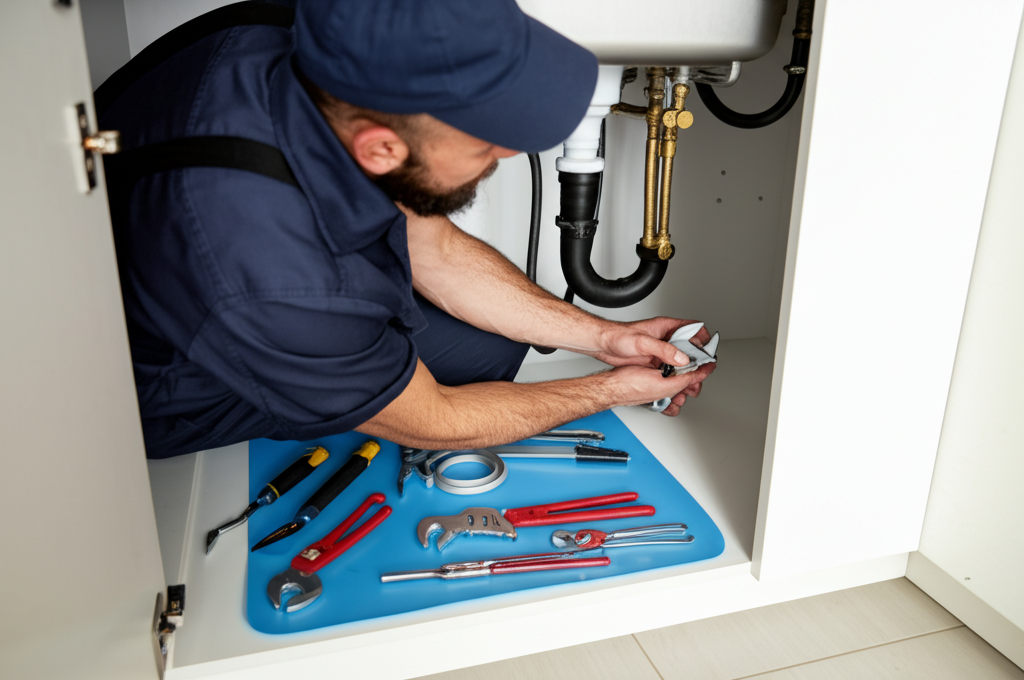
How to Start a Plumbing Business
Starting a plumbing business is one of the better moves you can make if you've got the skills. The demand is steady. People will always need working pipes, hot water, and functional toilets.
But knowing how to fix a leak and knowing how to run a business are two very different things. This guide walks you through every step, from getting your license to landing your first paying customer.
Do You Need a Plumbing License?
In almost every state, yes. You'll need some form of plumbing license before you can legally operate.
Most states require you to pass a trade exam. Some also require proof of a certain number of hours as an apprentice or journeyman. The exact requirements vary a lot by state, so check with your state licensing board early.
Here's the general path most plumbers follow:
- Apprentice (2 to 5 years of supervised work)
- Journeyman (pass an exam, work independently)
- Master Plumber (additional experience + exam, required in some states to own a business)
If you're already a licensed journeyman or master plumber, you're in good shape. If not, you'll want to get that sorted before anything else.
Some states also require a separate contractor's license on top of your plumbing license. Don't skip this step. Working without a license can lead to fines, lawsuits, or worse.
Write a Simple Business Plan
You don't need a 50-page document. But you do need to think through a few things before you start spending money.
Your plan should cover:
- What services you'll offer (residential, commercial, both)
- Your target area
- How much startup capital you need
- How you'll price your work
- How you'll find customers
A one-page plan is fine. The point is to get clear on what you're doing so you're not guessing as you go.
Choose a Business Structure
You'll need to register your business as a legal entity. The most common options for plumbing businesses are:
Sole Proprietorship is the simplest. You and the business are the same legal entity. Easy to set up, but your personal assets are at risk if anything goes wrong.
LLC (Limited Liability Company) is the most popular choice for trades businesses. It separates your personal assets from your business, which protects you if a customer sues or something goes sideways on a job.
S-Corp can offer some tax advantages once your revenue grows, but it's more complex to manage. Most people start as an LLC and consider switching later.
Talk to an accountant or business attorney if you're not sure. An LLC is a safe default for most new plumbing businesses.
Register Your Business and Get an EIN
Once you've chosen a structure, register your business with your state. In most cases, this costs between $50 and $500 depending on where you live.
You'll also want to get an EIN (Employer Identification Number) from the IRS. It's free and takes about five minutes on the IRS website. You'll need it to open a business bank account, file taxes, and hire employees.
Don't forget to check if your business name is available. Most states let you search their business name database online.
Get Insurance
This is not optional. Plumbing work can go wrong; pipes can burst, property can get damaged, someone can slip in a puddle. Without insurance, one bad job could wipe you out financially.
At a minimum, you'll want:
- General Liability Insurance covers property damage and bodily injury. Most customers and general contractors will require this before they'll hire you.
- Workers' Compensation is required in most states if you have employees. It covers medical bills and lost wages if someone gets hurt on the job.
- Commercial Auto Insurance if you're using a vehicle for work. Your personal auto policy probably won't cover incidents that happen while you're on the clock.
Expect to pay somewhere between $1,500 and $4,000 per year for basic coverage when you're starting out. Costs go up as you hire more people and take on bigger jobs.
Set Up Your Finances
Open a separate business bank account. Do not mix personal and business money. It makes taxes a nightmare and looks unprofessional.
You should also:
- Get a business credit card for supplies and expenses
- Set up an accounting system (QuickBooks and Wave are popular choices)
- Set aside 25 to 30 percent of your income for taxes
- Track every expense from day one
If numbers aren't your thing, hire a bookkeeper. Even a part-time one saves you hours and keeps your books clean.
Get the Right Tools and Equipment
You probably already own a lot of what you need. But if you're setting up from scratch, here's a rough idea of what a basic plumbing toolkit costs:
- Hand tools (wrenches, pliers, pipe cutters, etc.): $500 to $1,500
- Power tools (drill, reciprocating saw, etc.): $500 to $1,000
- Diagnostic tools (camera, leak detector): $1,000 to $5,000
- Work vehicle (used van or truck): $10,000 to $30,000
You don't need everything at once. Buy what you need for the jobs you're taking now and add to your kit over time.
Label and organize your tools. You'll thank yourself later when you're knee-deep under a crawlspace and need a specific fitting.
Figure Out Your Pricing
Pricing is where a lot of new plumbing business owners struggle. Charge too much and you don't get calls. Charge too little and you can't pay your bills.
There are two common pricing models:
Hourly Rate: Most plumbers charge between $75 and $200 per hour depending on their market and experience. This works well for repair calls.
Flat Rate: You quote a fixed price for the job regardless of how long it takes. Customers tend to prefer this because there are no surprises. It also rewards you for being efficient.
When setting your rates, factor in:
- Your labor cost (what you need to take home)
- Material costs
- Overhead (insurance, truck, tools, phone, software)
- Profit margin (aim for at least 15 to 20 percent)
Don't just copy what the other guy charges. Your costs are different. Run the numbers for your specific business.
Market Your Business
You can be the best plumber in your city, but if nobody knows you exist, you won't get any calls.
Here's what works for most new plumbing businesses:
Google Business Profile is the single most important thing you can do. Set it up with your address, phone number, hours, and service area. Customers searching for "plumber near me" will find you here.
Word of mouth is still king in this industry. Do great work, be polite, show up on time, and clean up after yourself. Happy customers will tell people.
A simple website that lists your services, service area, phone number, and a way to request a quote. It doesn't need to be fancy. It just needs to exist.
Door-to-door flyers work surprisingly well in the early days, especially in neighborhoods with older homes.
NextDoor, Facebook, and local community groups are free and full of homeowners looking for recommendations.
Don't bother with paid ads until you've maxed out the free stuff. Most plumbing businesses get their best leads from referrals and organic search.
Land Your First Customers
The hardest part of any new business is getting those first few jobs. Here are some ways to get the ball rolling:
- Tell everyone you know that you've started a plumbing business
- Offer a small discount for first-time customers
- Reach out to local real estate agents, property managers, and general contractors
- Partner with other trades (electricians, HVAC techs) who can refer work to you
- List your business on service platforms like Thumbtack or Angi
Once you get a few jobs under your belt, ask for reviews. Those early reviews on Google can make a huge difference.
Set Up Systems Early
It's tempting to run everything out of your head and a notebook. That works when you're doing two jobs a week. It breaks down fast.
Even as a one-person operation, set up basic systems for:
- Scheduling so jobs don't overlap or get forgotten
- Invoicing so you get paid on time
- Estimates so customers know what to expect before you start
- Customer records so you know the history of every property you've worked on
Field service software like Fieldbookly can handle all of this in one place. It's designed for exactly this kind of work, and you can start with a free plan.
Know When to Hire
If you're turning down work because you can't keep up, that's a good problem to have. But it also means it's time to think about hiring.
Your first hire doesn't have to be a licensed plumber. A helper or apprentice can carry tools, prep work sites, and learn on the job. This frees you up to focus on the actual plumbing.
Before you hire, make sure you have:
- Workers' compensation insurance
- Payroll set up (or outsource to a payroll service)
- A clear job description and pay rate
- Basic training and safety procedures
Hiring too early can drain your cash. Hiring too late means missed revenue. Pay attention to how many leads you're turning away, and use that as your signal.
Common Mistakes to Avoid
Most plumbing businesses that fail don't fail because of bad plumbing. They fail because of bad business decisions.
Undercharging is the biggest one. If you're busy all the time but still broke, your prices are too low.
Not tracking expenses means you don't know where your money is going. You might be losing money on every job and not even realize it.
Skipping insurance is a gamble that's not worth it. One lawsuit or one water damage claim can end your business.
Trying to do everything yourself leads to burnout. Get help with bookkeeping, scheduling, and admin work as soon as you can afford it.
The Bottom Line
Starting a plumbing business takes real effort, but the opportunity is there. The median pay for plumbers in the U.S. is around $63,000 a year as an employee. As a business owner, your ceiling is a lot higher.
Get your license, get insured, set up basic systems, do good work, and tell people about it. That's really all there is to it.
The trades aren't going anywhere. People need plumbers. If you're ready to bet on yourself, there's never been a better time to start.
Tagged with